A Katb Kteb (katb kitab, كتب الكتاب) is the gathering where a Muslim couple's marriage contract, the nikah, is concluded and signed before an officiant and witnesses. In Lebanon it can take place on the wedding day or months before it. At Qasr Noun in Ain Anub, the fountain courtyard is set aside for it.
This page has two jobs. It explains the Katb Kteb plainly, for couples, for families abroad and for guests who have been invited to one. And it describes the courtyard at Qasr Noun that was set aside for it. On religious and legal questions, your officiant is the authority, not a venue. Where we explain, we cite our sources so you can read them yourself.
What is a Katb Kteb? The meaning in English
Katb Kteb is the Lebanese way of saying كتب الكتاب, katb al-kitab. Word for word it means “writing the book”. A Lebanese-American student, interviewed for the USC Digital Folklore Archives, explained it as “to write the book,” and as “the agreement in the marriage” (USC Digital Folklore Archives, 2017). You will also see it written katb kitab, katb el-kitab or katb ktab. The more formal Arabic is عقد القران, the marriage contract.
In English, the clearest translation is the marriage contract ceremony. A German-Lebanese bride, describing her own, called it simply “our religious ceremony,” and explained: “The couple signs a marriage contract in front of a sheikh or imam, who officiates the ceremony” (The Sandy Times, 2025).
Wikipedia's account of the contract in Arab weddings describes the usual shape. A sheikh or imam gives a short speech on marriage. The bride's father, or the eldest man of her family, accepts the proposal. The legal documents are filled out, and two witnesses, usually the eldest men of each family, sign the contract. At that point the couple is married (Wikipedia: Arab wedding).
Katb kitab vs nikah: is there a difference?
They are the same act under two names. Nikah is the term in Islamic law for the marriage contract itself. Wikipedia's article on marriage in Islam sets out its core: a contract, the free consent of both bride and groom, a gift from the groom to the bride called the mahr, and witnesses to the marriage (Wikipedia: Marriage in Islam). Katb Kteb is the everyday name, in Lebanon and the wider Levant, for the gathering where that contract is concluded and signed.
What can differ is the party. The same article notes that the nikah is typically followed by a celebratory reception, in line with local custom. In Lebanon the Katb Kteb and the wedding night are often separate occasions. The USC account places it “either before the wedding ceremony or the day of.” The bride in The Sandy Times held hers in December, and her wedding the following July. For how it fits among the other customs, from the engagement to the zaffe, read our guide to Lebanese wedding traditions.
Katb Kteb in Lebanon (كتب كتاب في لبنان): why it matters legally
In Lebanon, the religious ceremony is not only symbolic. Lebanon has no civil code for personal status: marriage, divorce, inheritance and custody are governed by the separate religious legal systems of its recognised communities and administered by their own courts (Wikipedia: Family law in Lebanon). There is no civil marriage inside Lebanon either, as our guide to Lebanon's wedding season notes. As the bride above put it, the Katb Kteb is “the moment when the marriage becomes official in both religious and legal terms.”
That is why the paperwork belongs to the officiant, not the venue. Ask your sheikh or imam, early, which documents each of you must bring, who must be present, and how the contract will be registered afterwards.
Who attends a Katb Kteb
- The officiant. A sheikh or imam, who leads the ceremony and handles the contract.
- The couple. Both must consent freely; that is a condition of the contract, not a formality.
- The bride's guardian. Usually her father. Schools of Islamic law differ here: Wikipedia notes that the Hanafi school does not require a guardian for the bride.
- Two witnesses. Usually the eldest men of each family. Wikipedia notes that witnesses are required in Sunni Islam and recommended in Shia Islam.
- Close family and friends. The USC account calls it “very home-oriented”. The Sandy Times bride held hers “surrounded by our closest friends and family.”
Because the rules vary by school and by family, let the officiant confirm the list. Then build the guest list around it.
Where it happens, how long it takes, and what time of day
Where. In the Levant, Wikipedia notes, the Katb Kteb is usually held in the house of the bride's or the groom's family, sometimes in the wedding hall itself, in a mosque, or in court. A venue makes sense when the family home is too small, too far, or when you want the photographs to look like the day felt.
How long. The officiant's part is brief in Wikipedia's description: a short speech, the acceptance and the signatures. What takes time is everything around it: welcoming two families, the congratulations, photographs, coffee and something sweet. Plan the gathering, not just the ceremony.
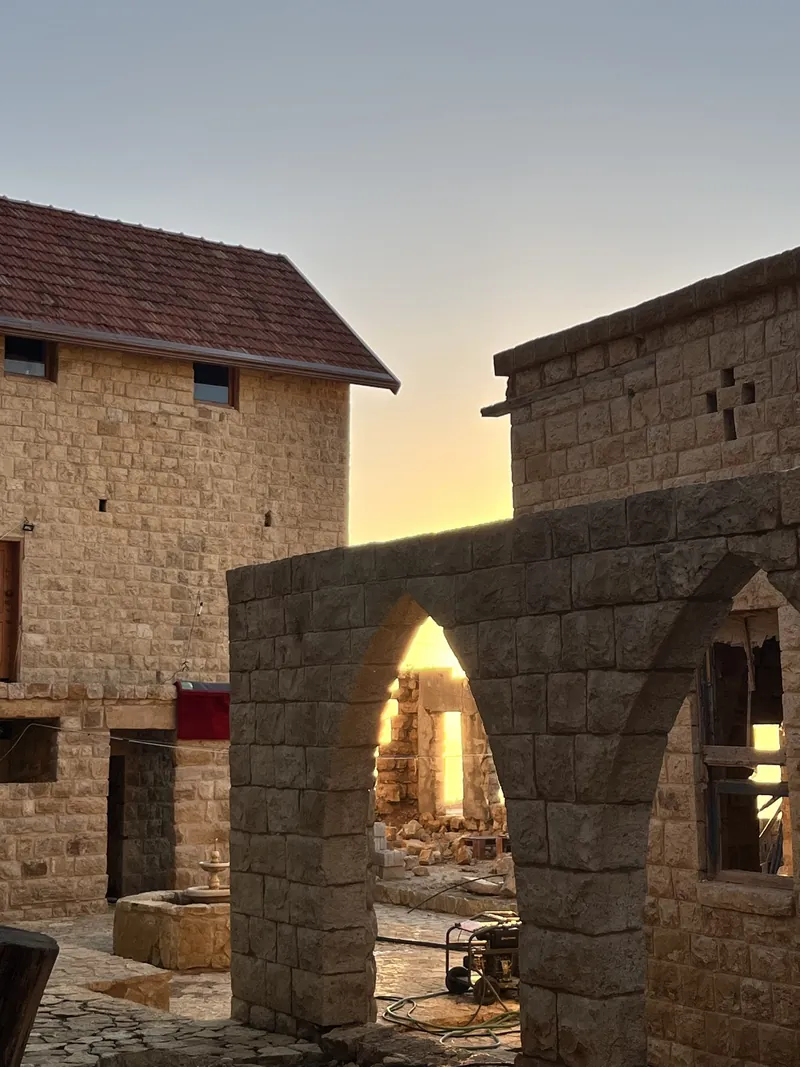
What time. If the Katb Kteb stands on its own day, a late-afternoon start lets the contract be signed in daylight and the photographs catch the last light. In Ain Anub, sunset on the 15th of the month falls at about 19:50 in June, 18:43 in September and 18:03 in October. If it falls on the wedding day, hold it in the fountain courtyard before the wider guest list arrives, then move to the arcade for the evening. For a full year of light and weather, see the best time to get married in Lebanon.
Katb kitab decoration ideas for a stone courtyard
A stone courtyard needs less decoration than a blank hall. The aim is to frame the contract, not to fill the space.
- One table, clearly placed. A linen-covered table for the officiant and the contract, in front of the arch or beside the fountain, where every family member can see the signing.
- Flowers on the arch. White roses and greenery read well against honey-coloured stone. Use a freestanding frame; nothing should be fixed to the old stone.
- Seats for the families. Rows or a gentle half circle facing the table, with the eldest relatives at the front and in the shade.
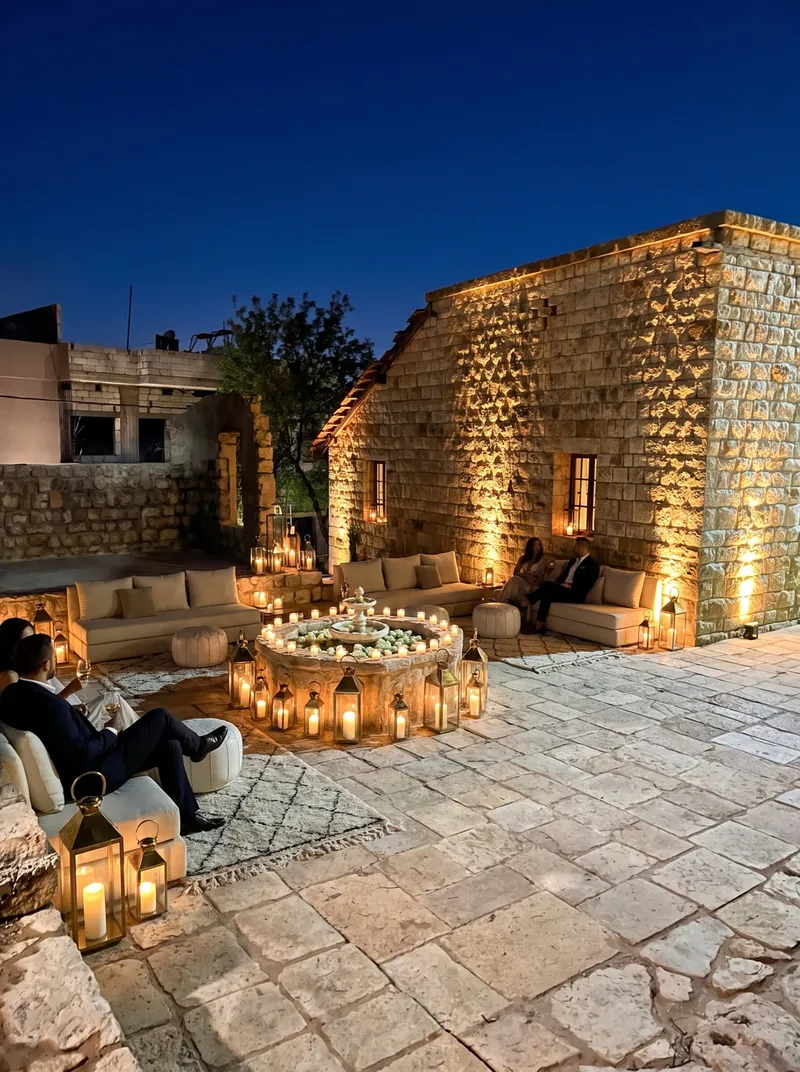
- Candles for dusk. Lanterns around the fountain carry the evening after sunset. Ask what is allowed near the stone before you order them.
- Warm light on the walls. After dark, low warm light on the stone does more than any centrepiece. Sound and lighting are part of the package at Qasr Noun.
- A table for afterwards. Coffee and sweets for the congratulations, set a little away from the contract table.
What to wear to a Katb Kteb in Lebanon
We could not find a published dress code for a Katb Kteb in Lebanon, and families differ. So treat this as practical guidance, and ask the couple when in doubt.
- Guests. Dress for a religious occasion. Covered shoulders and knees are a respectful default; a light scarf in a bag costs nothing. Ask the hosts if you are unsure what the officiant or the family expects.
- The bride. If the wedding is another day, the Katb Kteb outfit does not need to be the wedding gown. Choose something you can sit in comfortably during the signing and stand in for the photographs. Long sleeves or a shawl make the choice easy if the family prefers modest dress.
- The groom. A suit is a safe choice.
- For a courtyard. Stone and cobbles are hard on stilettos, so choose block heels. In October the average low in Ain Anub is 15.3 °C, so bring a wrap for after sunset.
The fountain courtyard at Qasr Noun
Of the eight places on the estate, the fountain courtyard is the one we describe as close and quiet, made for the Katb Kteb. Stone buildings stand around it, an arch frames the evening sun, and the fountain gives it its name. Afterwards, the day can move on: to the balcony for the sunset over the sea, then to the arcade for dinner. Or the Katb Kteb can stand on its own day, with the courtyard set only for your families.
The whole day is yours until 1:30 AM. If you wish, food and drink can come from our own team: a full buffet with chefs on site, waiters and a captain, and a welcome drink for every guest. See what the wedding package includes, and for a gathering this size, our notes on small and intimate weddings. If an engagement comes first, read about an engagement party at the olive tree, and about the estate's outdoor spaces for the wedding night.
We do not publish capacities. Tell us how many family members will attend, and we will show you how the courtyard is set. Weddings and Katb Kteb at Qasr Noun begin in summer 2027.